
websites
websites
websites
websites
websites
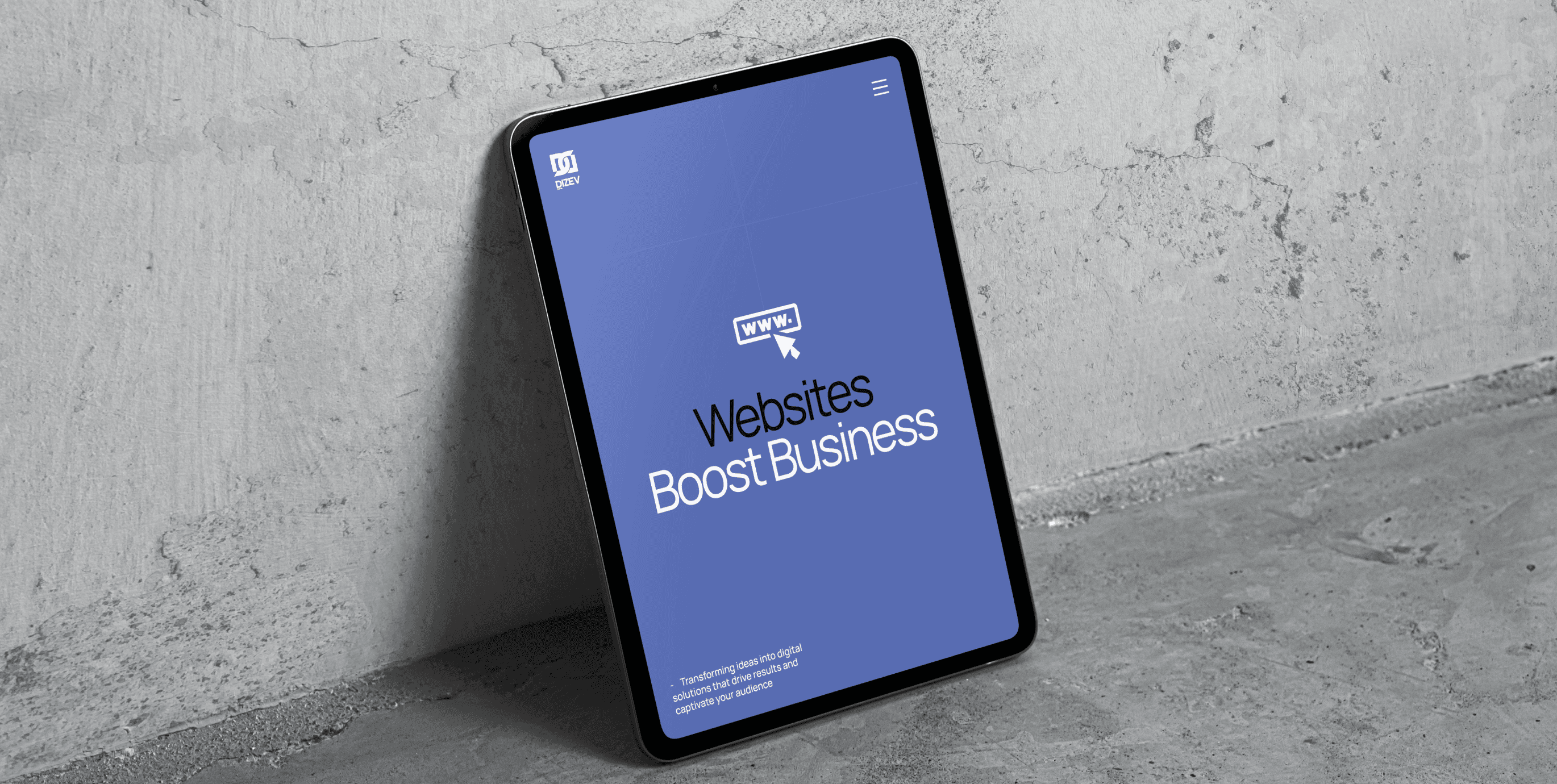
Websites Boost Business
Websites Boost Business
Websites Boost Business
Websites Boost Business
Websites Boost Business
//
//
//
//
//
author
author
author
author
author
Artur Kogut
Artur Kogut
Artur Kogut
Artur Kogut
//
//
//
//
//
Year
Year
Year
Year
Year
( 2025 )
( 2024 )
( 2024 )
( 2024 )
( 2024 )
Content
Is it important for a business to have a website? The answer is yes. But not just to "have" one — it must be done right.
In a world where digital presence is no longer a luxury but a necessity, having your own website has long moved beyond being a “nice-to-have” for businesses. It’s a foundational tool for communication, sales, branding, and building trust. A website is your business card, your marketing engine, and your 24/7 sales rep — all in one.
As a designer who builds not just interfaces, but digital solutions that grow brands, I often see businesses underestimate the true potential of a well-crafted website. So let’s break down why a website isn’t just something you should have, but something you need to do right — and what it actually brings to the table.
Here are just a few reasons why:
1. Better Customer Service.
Your website works even when your office is closed. It gives clients instant access to key information: FAQs, products, services, pricing, hours, contact info — and even the ability to place an order — all on their own time. Most importantly, a well-structured website reduces the burden on your support team. Customers can find answers themselves, saving time while improving overall satisfaction.
2. Stronger Brand & Recognition.
Your website is your first impression. If it looks outdated or confusing, users subconsciously associate that with your business. But when everything — from typography to visuals — inspires trust and emotional connection, you’re shaping the right perception of your brand.
Your website allows you to control how your brand is seen: through your style, tone of voice, visual identity, and values. Unlike social media with its limitations, your website is your own independent, full-featured platform.
3. Attracting New Customers.
Unlike short-lived ad campaigns, your website is a long-term asset. A well-optimized, content-rich site can continuously bring in new leads through search engines. People are searching — your website should be answering. It’s also a powerful lead generation tool: with contact forms, call-to-actions, and interactive elements, your site becomes a conversion machine that you control — without third-party gatekeepers.
4. Data That Speaks Louder Than Intuition.
No growth without numbers. Your website collects valuable analytics: who visits, where they come from, what they view, and where they drop off. With that data, you can test hypotheses, predict behavior, and adapt your business strategy based on facts — not guesses.
And the best part? It runs automatically. You don’t need to wonder why sales dropped — your website will tell you.
5. New Revenue Streams
Your website can become a sales platform: launching an online store, selling digital products, offering courses or appointment bookings. You set the pricing, control delivery, manage payments — and avoid paying commissions to marketplaces.
You can also combine online sales with offline services, using the website as a central hub that connects your customer to your business
6. Building Trust and Credibility.
Businesses with a website are perceived as more legitimate than those operating solely through Instagram. Especially if your site includes team bios, client testimonials, success stories, and certifications — all of which boost transparency and trust.
People don’t want to buy from strangers. Your website is the handshake before they ever message you.
7. Mobile Responsiveness Is a Must.
By 2025, your site must work flawlessly across all screens and devices. If it’s not mobile-friendly, you’re losing more than half your potential audience. Mobile-first design isn’t a luxury anymore — it’s the baseline. As a designer, I always begin with the mobile experience, because for today’s users, that’s where most interaction happens.
8. Competitive Advantage.
Business is a race for attention. If your competitor has a website and you don’t, you’re instantly behind. People won’t search long — they’ll go where things are clear, fast, and easy to act on.
Even a small but well-designed website can tip the scale in your favor and become the reason someone chooses you over the rest.
A website is not just an “online brochure.” It’s the core of your business presence, a sales channel, a trust builder, a data hub, and a platform to grow your brand. It works even while you sleep.
But it’s not enough to just “have” a website. It has to be thoughtfully designed, intuitive, responsive, visually compelling, and tailored to your audience. As a designer, I help businesses build exactly that — not just websites that look good, but websites that work.
Is it important for a business to have a website? The answer is yes. But not just to "have" one — it must be done right.
In a world where digital presence is no longer a luxury but a necessity, having your own website has long moved beyond being a “nice-to-have” for businesses. It’s a foundational tool for communication, sales, branding, and building trust. A website is your business card, your marketing engine, and your 24/7 sales rep — all in one.
As a designer who builds not just interfaces, but digital solutions that grow brands, I often see businesses underestimate the true potential of a well-crafted website. So let’s break down why a website isn’t just something you should have, but something you need to do right — and what it actually brings to the table.
Here are just a few reasons why:
1. Better Customer Service.
Your website works even when your office is closed. It gives clients instant access to key information: FAQs, products, services, pricing, hours, contact info — and even the ability to place an order — all on their own time. Most importantly, a well-structured website reduces the burden on your support team. Customers can find answers themselves, saving time while improving overall satisfaction.
2. Stronger Brand & Recognition.
Your website is your first impression. If it looks outdated or confusing, users subconsciously associate that with your business. But when everything — from typography to visuals — inspires trust and emotional connection, you’re shaping the right perception of your brand.
Your website allows you to control how your brand is seen: through your style, tone of voice, visual identity, and values. Unlike social media with its limitations, your website is your own independent, full-featured platform.
3. Attracting New Customers.
Unlike short-lived ad campaigns, your website is a long-term asset. A well-optimized, content-rich site can continuously bring in new leads through search engines. People are searching — your website should be answering. It’s also a powerful lead generation tool: with contact forms, call-to-actions, and interactive elements, your site becomes a conversion machine that you control — without third-party gatekeepers.
4. Data That Speaks Louder Than Intuition.
No growth without numbers. Your website collects valuable analytics: who visits, where they come from, what they view, and where they drop off. With that data, you can test hypotheses, predict behavior, and adapt your business strategy based on facts — not guesses.
And the best part? It runs automatically. You don’t need to wonder why sales dropped — your website will tell you.
5. New Revenue Streams
Your website can become a sales platform: launching an online store, selling digital products, offering courses or appointment bookings. You set the pricing, control delivery, manage payments — and avoid paying commissions to marketplaces.
You can also combine online sales with offline services, using the website as a central hub that connects your customer to your business
6. Building Trust and Credibility.
Businesses with a website are perceived as more legitimate than those operating solely through Instagram. Especially if your site includes team bios, client testimonials, success stories, and certifications — all of which boost transparency and trust.
People don’t want to buy from strangers. Your website is the handshake before they ever message you.
7. Mobile Responsiveness Is a Must.
By 2025, your site must work flawlessly across all screens and devices. If it’s not mobile-friendly, you’re losing more than half your potential audience. Mobile-first design isn’t a luxury anymore — it’s the baseline. As a designer, I always begin with the mobile experience, because for today’s users, that’s where most interaction happens.
8. Competitive Advantage.
Business is a race for attention. If your competitor has a website and you don’t, you’re instantly behind. People won’t search long — they’ll go where things are clear, fast, and easy to act on.
Even a small but well-designed website can tip the scale in your favor and become the reason someone chooses you over the rest.
A website is not just an “online brochure.” It’s the core of your business presence, a sales channel, a trust builder, a data hub, and a platform to grow your brand. It works even while you sleep.
But it’s not enough to just “have” a website. It has to be thoughtfully designed, intuitive, responsive, visually compelling, and tailored to your audience. As a designer, I help businesses build exactly that — not just websites that look good, but websites that work.
Is it important for a business to have a website? The answer is yes. But not just to "have" one — it must be done right.
In a world where digital presence is no longer a luxury but a necessity, having your own website has long moved beyond being a “nice-to-have” for businesses. It’s a foundational tool for communication, sales, branding, and building trust. A website is your business card, your marketing engine, and your 24/7 sales rep — all in one.
As a designer who builds not just interfaces, but digital solutions that grow brands, I often see businesses underestimate the true potential of a well-crafted website. So let’s break down why a website isn’t just something you should have, but something you need to do right — and what it actually brings to the table.
Here are just a few reasons why:
1. Better Customer Service.
Your website works even when your office is closed. It gives clients instant access to key information: FAQs, products, services, pricing, hours, contact info — and even the ability to place an order — all on their own time. Most importantly, a well-structured website reduces the burden on your support team. Customers can find answers themselves, saving time while improving overall satisfaction.
2. Stronger Brand & Recognition.
Your website is your first impression. If it looks outdated or confusing, users subconsciously associate that with your business. But when everything — from typography to visuals — inspires trust and emotional connection, you’re shaping the right perception of your brand.
Your website allows you to control how your brand is seen: through your style, tone of voice, visual identity, and values. Unlike social media with its limitations, your website is your own independent, full-featured platform.
3. Attracting New Customers.
Unlike short-lived ad campaigns, your website is a long-term asset. A well-optimized, content-rich site can continuously bring in new leads through search engines. People are searching — your website should be answering. It’s also a powerful lead generation tool: with contact forms, call-to-actions, and interactive elements, your site becomes a conversion machine that you control — without third-party gatekeepers.
4. Data That Speaks Louder Than Intuition.
No growth without numbers. Your website collects valuable analytics: who visits, where they come from, what they view, and where they drop off. With that data, you can test hypotheses, predict behavior, and adapt your business strategy based on facts — not guesses.
And the best part? It runs automatically. You don’t need to wonder why sales dropped — your website will tell you.
5. New Revenue Streams
Your website can become a sales platform: launching an online store, selling digital products, offering courses or appointment bookings. You set the pricing, control delivery, manage payments — and avoid paying commissions to marketplaces.
You can also combine online sales with offline services, using the website as a central hub that connects your customer to your business
6. Building Trust and Credibility.
Businesses with a website are perceived as more legitimate than those operating solely through Instagram. Especially if your site includes team bios, client testimonials, success stories, and certifications — all of which boost transparency and trust.
People don’t want to buy from strangers. Your website is the handshake before they ever message you.
7. Mobile Responsiveness Is a Must.
By 2025, your site must work flawlessly across all screens and devices. If it’s not mobile-friendly, you’re losing more than half your potential audience. Mobile-first design isn’t a luxury anymore — it’s the baseline. As a designer, I always begin with the mobile experience, because for today’s users, that’s where most interaction happens.
8. Competitive Advantage.
Business is a race for attention. If your competitor has a website and you don’t, you’re instantly behind. People won’t search long — they’ll go where things are clear, fast, and easy to act on.
Even a small but well-designed website can tip the scale in your favor and become the reason someone chooses you over the rest.
A website is not just an “online brochure.” It’s the core of your business presence, a sales channel, a trust builder, a data hub, and a platform to grow your brand. It works even while you sleep.
But it’s not enough to just “have” a website. It has to be thoughtfully designed, intuitive, responsive, visually compelling, and tailored to your audience. As a designer, I help businesses build exactly that — not just websites that look good, but websites that work.
Is it important for a business to have a website? The answer is yes. But not just to "have" one — it must be done right.
In a world where digital presence is no longer a luxury but a necessity, having your own website has long moved beyond being a “nice-to-have” for businesses. It’s a foundational tool for communication, sales, branding, and building trust. A website is your business card, your marketing engine, and your 24/7 sales rep — all in one.
As a designer who builds not just interfaces, but digital solutions that grow brands, I often see businesses underestimate the true potential of a well-crafted website. So let’s break down why a website isn’t just something you should have, but something you need to do right — and what it actually brings to the table.
Here are just a few reasons why:
1. Better Customer Service.
Your website works even when your office is closed. It gives clients instant access to key information: FAQs, products, services, pricing, hours, contact info — and even the ability to place an order — all on their own time. Most importantly, a well-structured website reduces the burden on your support team. Customers can find answers themselves, saving time while improving overall satisfaction.
2. Stronger Brand & Recognition.
Your website is your first impression. If it looks outdated or confusing, users subconsciously associate that with your business. But when everything — from typography to visuals — inspires trust and emotional connection, you’re shaping the right perception of your brand.
Your website allows you to control how your brand is seen: through your style, tone of voice, visual identity, and values. Unlike social media with its limitations, your website is your own independent, full-featured platform.
3. Attracting New Customers.
Unlike short-lived ad campaigns, your website is a long-term asset. A well-optimized, content-rich site can continuously bring in new leads through search engines. People are searching — your website should be answering. It’s also a powerful lead generation tool: with contact forms, call-to-actions, and interactive elements, your site becomes a conversion machine that you control — without third-party gatekeepers.
4. Data That Speaks Louder Than Intuition.
No growth without numbers. Your website collects valuable analytics: who visits, where they come from, what they view, and where they drop off. With that data, you can test hypotheses, predict behavior, and adapt your business strategy based on facts — not guesses.
And the best part? It runs automatically. You don’t need to wonder why sales dropped — your website will tell you.
5. New Revenue Streams
Your website can become a sales platform: launching an online store, selling digital products, offering courses or appointment bookings. You set the pricing, control delivery, manage payments — and avoid paying commissions to marketplaces.
You can also combine online sales with offline services, using the website as a central hub that connects your customer to your business
6. Building Trust and Credibility.
Businesses with a website are perceived as more legitimate than those operating solely through Instagram. Especially if your site includes team bios, client testimonials, success stories, and certifications — all of which boost transparency and trust.
People don’t want to buy from strangers. Your website is the handshake before they ever message you.
7. Mobile Responsiveness Is a Must.
By 2025, your site must work flawlessly across all screens and devices. If it’s not mobile-friendly, you’re losing more than half your potential audience. Mobile-first design isn’t a luxury anymore — it’s the baseline. As a designer, I always begin with the mobile experience, because for today’s users, that’s where most interaction happens.
8. Competitive Advantage.
Business is a race for attention. If your competitor has a website and you don’t, you’re instantly behind. People won’t search long — they’ll go where things are clear, fast, and easy to act on.
Even a small but well-designed website can tip the scale in your favor and become the reason someone chooses you over the rest.
A website is not just an “online brochure.” It’s the core of your business presence, a sales channel, a trust builder, a data hub, and a platform to grow your brand. It works even while you sleep.
But it’s not enough to just “have” a website. It has to be thoughtfully designed, intuitive, responsive, visually compelling, and tailored to your audience. As a designer, I help businesses build exactly that — not just websites that look good, but websites that work.
Is it important for a business to have a website? The answer is yes. But not just to "have" one — it must be done right.
In a world where digital presence is no longer a luxury but a necessity, having your own website has long moved beyond being a “nice-to-have” for businesses. It’s a foundational tool for communication, sales, branding, and building trust. A website is your business card, your marketing engine, and your 24/7 sales rep — all in one.
As a designer who builds not just interfaces, but digital solutions that grow brands, I often see businesses underestimate the true potential of a well-crafted website. So let’s break down why a website isn’t just something you should have, but something you need to do right — and what it actually brings to the table.
Here are just a few reasons why:
1. Better Customer Service.
Your website works even when your office is closed. It gives clients instant access to key information: FAQs, products, services, pricing, hours, contact info — and even the ability to place an order — all on their own time. Most importantly, a well-structured website reduces the burden on your support team. Customers can find answers themselves, saving time while improving overall satisfaction.
2. Stronger Brand & Recognition.
Your website is your first impression. If it looks outdated or confusing, users subconsciously associate that with your business. But when everything — from typography to visuals — inspires trust and emotional connection, you’re shaping the right perception of your brand.
Your website allows you to control how your brand is seen: through your style, tone of voice, visual identity, and values. Unlike social media with its limitations, your website is your own independent, full-featured platform.
3. Attracting New Customers.
Unlike short-lived ad campaigns, your website is a long-term asset. A well-optimized, content-rich site can continuously bring in new leads through search engines. People are searching — your website should be answering. It’s also a powerful lead generation tool: with contact forms, call-to-actions, and interactive elements, your site becomes a conversion machine that you control — without third-party gatekeepers.
4. Data That Speaks Louder Than Intuition.
No growth without numbers. Your website collects valuable analytics: who visits, where they come from, what they view, and where they drop off. With that data, you can test hypotheses, predict behavior, and adapt your business strategy based on facts — not guesses.
And the best part? It runs automatically. You don’t need to wonder why sales dropped — your website will tell you.
5. New Revenue Streams
Your website can become a sales platform: launching an online store, selling digital products, offering courses or appointment bookings. You set the pricing, control delivery, manage payments — and avoid paying commissions to marketplaces.
You can also combine online sales with offline services, using the website as a central hub that connects your customer to your business
6. Building Trust and Credibility.
Businesses with a website are perceived as more legitimate than those operating solely through Instagram. Especially if your site includes team bios, client testimonials, success stories, and certifications — all of which boost transparency and trust.
People don’t want to buy from strangers. Your website is the handshake before they ever message you.
7. Mobile Responsiveness Is a Must.
By 2025, your site must work flawlessly across all screens and devices. If it’s not mobile-friendly, you’re losing more than half your potential audience. Mobile-first design isn’t a luxury anymore — it’s the baseline. As a designer, I always begin with the mobile experience, because for today’s users, that’s where most interaction happens.
8. Competitive Advantage.
Business is a race for attention. If your competitor has a website and you don’t, you’re instantly behind. People won’t search long — they’ll go where things are clear, fast, and easy to act on.
Even a small but well-designed website can tip the scale in your favor and become the reason someone chooses you over the rest.
A website is not just an “online brochure.” It’s the core of your business presence, a sales channel, a trust builder, a data hub, and a platform to grow your brand. It works even while you sleep.
But it’s not enough to just “have” a website. It has to be thoughtfully designed, intuitive, responsive, visually compelling, and tailored to your audience. As a designer, I help businesses build exactly that — not just websites that look good, but websites that work.
//
//
//
//
//
Blog
Blog
Blog
Blog
Blog
Read also other
latest articles
Read also other
latest articles
Brainstorming That Works
Brainstorming That Works
Brainstorming That Works
Brainstorming That Works
( 2024 )
( 2024 )
Beauty or utility in design
Beauty or utility in design
Beauty or utility in design
Beauty or utility in design
( 2023 )
( 2024 )
Beauty or utility in design
( 2023 )
Please tell me about your project
Please tell me about your project
Please tell me about your project
Please tell me about your project
Free consultation with an expert. Choose a convenient time or send message in Telegram or WhatsApp and I will contact you!
Free consultation with an expert. Choose a convenient time or send message in Telegram or WhatsApp and I will contact you!
Free consultation with an expert. Choose a convenient time or send message in Telegram or WhatsApp and I will contact you!
Free consultation with an expert. Choose a convenient time or send message in Telegram or WhatsApp and I will contact you!
Please tell me about your project
Free consultation with an expert. Choose a convenient time or send message in Telegram or WhatsApp and I will contact you!
//
get in touch
©2025 Copyright

//
get in touch
©2025 Copyright
//
get in touch
©2025 Copyright
//
get in touch
©2025 Copyright