
UX/UI Design
UX/UI Design
UX/UI Design
UX/UI Design
UX/UI Design
Beauty or utility in design
Beauty or utility in design
Beauty or utility in design
Beauty or utility in design
Beauty or utility in design
//
//
//
//
//
author
author
author
author
author
Artur Kogut
Artur Kogut
Artur Kogut
Artur Kogut
//
//
//
//
//
Year
Year
Year
Year
Year
( 2025 )
( 2024 )
( 2024 )
( 2024 )
( 2024 )
Content
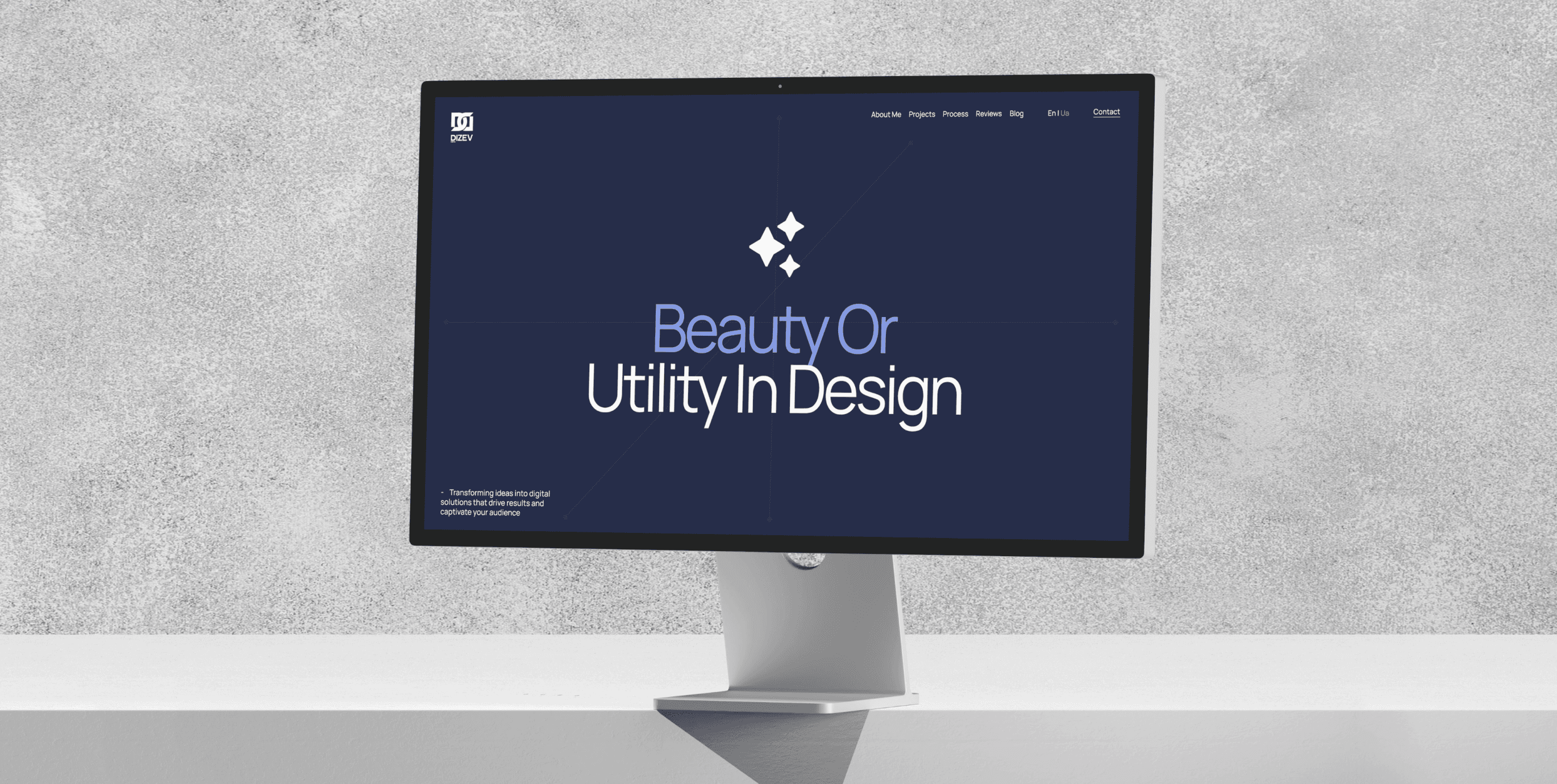
Beautiful or Functional? Finding the Balance Between Aesthetics and Usability in Digital Design
In the world of design, this question comes up more often than you might think: “What’s more important — beauty or functionality?” It seems to split professionals into two camps: some argue that visual appeal is key, while others believe that user experience rules. But in reality — and I say this as a designer — true value begins where these two worlds meet.
We often imagine “beautiful design” as something minimal, clean, elegant. And in many contexts, that’s enough: a great font, well-balanced spacing, a thoughtful color palette — and the result can be stunning. But in real-world product design, that’s just the surface.
Try applying the same “beautiful layout” from a portfolio to a government platform, an online education tool, or a corporate intranet. You’ll quickly realize that beauty without structure, logic, and hierarchy doesn’t add value — it becomes a barrier.
In these cases, it’s not enough to simply make something look nice. You need to rethink the layout: plan the grid, define guiding lines, balance the white space, and consider the order in which content is perceived. Only then comes the decoration.
Functionality is no longer a “feature” — it’s a basic expectation. If users can’t find what they need, don’t understand where to click, or feel lost in the interface, no amount of visual polish will save the experience.
And businesses know this. They don’t just want pretty websites — they want results: more customers, smoother journeys, higher conversions. In that context, the designer is no longer just a visual executor, but a strategic partner who understands how appearance influences behavior. That’s why when I work on a product, I always prioritize functionality. Not because I think aesthetics aren’t important — but because functionality is the foundation. And only on that foundation can you build something that truly has visual power.
When we talk about beauty in design, we need to understand: it should never be an end in itself. Its power lies in amplifying the experience. The right typeface can make an interface feel friendly. A well-balanced color scheme can reduce cognitive load. Visual accents can guide users through complex flows.
This isn’t about “aesthetics for the sake of aesthetics.” It’s about aesthetics as a function.
I believe good design is never a choice between “pretty or practical.” It’s always: “both beautiful and practical.” That’s the sweet spot — when visual choices serve the user, not just the designer’s portfolio.
We live in a time where designers are no longer “the ones who make things look nice.” A designer today is a problem-solver — someone who asks the right questions: What does the user need? What’s getting in their way? ЯHow can visual design help — or hurt?
Only then do we ask: How should it look?
True design begins at the intersection of these mindsets. When aesthetics enhance functionality. When visuals don’t just look magical, but guide, clarify, and support the experience. When beauty isn’t for Behance likes — but for better outcomes. That’s the approach I bring to my work. Because real value is born in balance. And that balance is where design becomes a craft.
Beautiful or Functional? Finding the Balance Between Aesthetics and Usability in Digital Design
In the world of design, this question comes up more often than you might think: “What’s more important — beauty or functionality?” It seems to split professionals into two camps: some argue that visual appeal is key, while others believe that user experience rules. But in reality — and I say this as a designer — true value begins where these two worlds meet.
We often imagine “beautiful design” as something minimal, clean, elegant. And in many contexts, that’s enough: a great font, well-balanced spacing, a thoughtful color palette — and the result can be stunning. But in real-world product design, that’s just the surface.
Try applying the same “beautiful layout” from a portfolio to a government platform, an online education tool, or a corporate intranet. You’ll quickly realize that beauty without structure, logic, and hierarchy doesn’t add value — it becomes a barrier.
In these cases, it’s not enough to simply make something look nice. You need to rethink the layout: plan the grid, define guiding lines, balance the white space, and consider the order in which content is perceived. Only then comes the decoration.
Functionality is no longer a “feature” — it’s a basic expectation. If users can’t find what they need, don’t understand where to click, or feel lost in the interface, no amount of visual polish will save the experience.
And businesses know this. They don’t just want pretty websites — they want results: more customers, smoother journeys, higher conversions. In that context, the designer is no longer just a visual executor, but a strategic partner who understands how appearance influences behavior. That’s why when I work on a product, I always prioritize functionality. Not because I think aesthetics aren’t important — but because functionality is the foundation. And only on that foundation can you build something that truly has visual power.
When we talk about beauty in design, we need to understand: it should never be an end in itself. Its power lies in amplifying the experience. The right typeface can make an interface feel friendly. A well-balanced color scheme can reduce cognitive load. Visual accents can guide users through complex flows.
This isn’t about “aesthetics for the sake of aesthetics.” It’s about aesthetics as a function.
I believe good design is never a choice between “pretty or practical.” It’s always: “both beautiful and practical.” That’s the sweet spot — when visual choices serve the user, not just the designer’s portfolio.
We live in a time where designers are no longer “the ones who make things look nice.” A designer today is a problem-solver — someone who asks the right questions: What does the user need? What’s getting in their way? ЯHow can visual design help — or hurt?
Only then do we ask: How should it look?
True design begins at the intersection of these mindsets. When aesthetics enhance functionality. When visuals don’t just look magical, but guide, clarify, and support the experience. When beauty isn’t for Behance likes — but for better outcomes. That’s the approach I bring to my work. Because real value is born in balance. And that balance is where design becomes a craft.
Beautiful or Functional? Finding the Balance Between Aesthetics and Usability in Digital Design
In the world of design, this question comes up more often than you might think: “What’s more important — beauty or functionality?” It seems to split professionals into two camps: some argue that visual appeal is key, while others believe that user experience rules. But in reality — and I say this as a designer — true value begins where these two worlds meet.
We often imagine “beautiful design” as something minimal, clean, elegant. And in many contexts, that’s enough: a great font, well-balanced spacing, a thoughtful color palette — and the result can be stunning. But in real-world product design, that’s just the surface.
Try applying the same “beautiful layout” from a portfolio to a government platform, an online education tool, or a corporate intranet. You’ll quickly realize that beauty without structure, logic, and hierarchy doesn’t add value — it becomes a barrier.
In these cases, it’s not enough to simply make something look nice. You need to rethink the layout: plan the grid, define guiding lines, balance the white space, and consider the order in which content is perceived. Only then comes the decoration.
Functionality is no longer a “feature” — it’s a basic expectation. If users can’t find what they need, don’t understand where to click, or feel lost in the interface, no amount of visual polish will save the experience.
And businesses know this. They don’t just want pretty websites — they want results: more customers, smoother journeys, higher conversions. In that context, the designer is no longer just a visual executor, but a strategic partner who understands how appearance influences behavior. That’s why when I work on a product, I always prioritize functionality. Not because I think aesthetics aren’t important — but because functionality is the foundation. And only on that foundation can you build something that truly has visual power.
When we talk about beauty in design, we need to understand: it should never be an end in itself. Its power lies in amplifying the experience. The right typeface can make an interface feel friendly. A well-balanced color scheme can reduce cognitive load. Visual accents can guide users through complex flows.
This isn’t about “aesthetics for the sake of aesthetics.” It’s about aesthetics as a function.
I believe good design is never a choice between “pretty or practical.” It’s always: “both beautiful and practical.” That’s the sweet spot — when visual choices serve the user, not just the designer’s portfolio.
We live in a time where designers are no longer “the ones who make things look nice.” A designer today is a problem-solver — someone who asks the right questions: What does the user need? What’s getting in their way? ЯHow can visual design help — or hurt?
Only then do we ask: How should it look?
True design begins at the intersection of these mindsets. When aesthetics enhance functionality. When visuals don’t just look magical, but guide, clarify, and support the experience. When beauty isn’t for Behance likes — but for better outcomes. That’s the approach I bring to my work. Because real value is born in balance. And that balance is where design becomes a craft.
Beautiful or Functional? Finding the Balance Between Aesthetics and Usability in Digital Design
In the world of design, this question comes up more often than you might think: “What’s more important — beauty or functionality?” It seems to split professionals into two camps: some argue that visual appeal is key, while others believe that user experience rules. But in reality — and I say this as a designer — true value begins where these two worlds meet.
We often imagine “beautiful design” as something minimal, clean, elegant. And in many contexts, that’s enough: a great font, well-balanced spacing, a thoughtful color palette — and the result can be stunning. But in real-world product design, that’s just the surface.
Try applying the same “beautiful layout” from a portfolio to a government platform, an online education tool, or a corporate intranet. You’ll quickly realize that beauty without structure, logic, and hierarchy doesn’t add value — it becomes a barrier.
In these cases, it’s not enough to simply make something look nice. You need to rethink the layout: plan the grid, define guiding lines, balance the white space, and consider the order in which content is perceived. Only then comes the decoration.
Functionality is no longer a “feature” — it’s a basic expectation. If users can’t find what they need, don’t understand where to click, or feel lost in the interface, no amount of visual polish will save the experience.
And businesses know this. They don’t just want pretty websites — they want results: more customers, smoother journeys, higher conversions. In that context, the designer is no longer just a visual executor, but a strategic partner who understands how appearance influences behavior. That’s why when I work on a product, I always prioritize functionality. Not because I think aesthetics aren’t important — but because functionality is the foundation. And only on that foundation can you build something that truly has visual power.
When we talk about beauty in design, we need to understand: it should never be an end in itself. Its power lies in amplifying the experience. The right typeface can make an interface feel friendly. A well-balanced color scheme can reduce cognitive load. Visual accents can guide users through complex flows.
This isn’t about “aesthetics for the sake of aesthetics.” It’s about aesthetics as a function.
I believe good design is never a choice between “pretty or practical.” It’s always: “both beautiful and practical.” That’s the sweet spot — when visual choices serve the user, not just the designer’s portfolio.
We live in a time where designers are no longer “the ones who make things look nice.” A designer today is a problem-solver — someone who asks the right questions: What does the user need? What’s getting in their way? ЯHow can visual design help — or hurt?
Only then do we ask: How should it look?
True design begins at the intersection of these mindsets. When aesthetics enhance functionality. When visuals don’t just look magical, but guide, clarify, and support the experience. When beauty isn’t for Behance likes — but for better outcomes. That’s the approach I bring to my work. Because real value is born in balance. And that balance is where design becomes a craft.
Beautiful or Functional? Finding the Balance Between Aesthetics and Usability in Digital Design
In the world of design, this question comes up more often than you might think: “What’s more important — beauty or functionality?” It seems to split professionals into two camps: some argue that visual appeal is key, while others believe that user experience rules. But in reality — and I say this as a designer — true value begins where these two worlds meet.
We often imagine “beautiful design” as something minimal, clean, elegant. And in many contexts, that’s enough: a great font, well-balanced spacing, a thoughtful color palette — and the result can be stunning. But in real-world product design, that’s just the surface.
Try applying the same “beautiful layout” from a portfolio to a government platform, an online education tool, or a corporate intranet. You’ll quickly realize that beauty without structure, logic, and hierarchy doesn’t add value — it becomes a barrier.
In these cases, it’s not enough to simply make something look nice. You need to rethink the layout: plan the grid, define guiding lines, balance the white space, and consider the order in which content is perceived. Only then comes the decoration.
Functionality is no longer a “feature” — it’s a basic expectation. If users can’t find what they need, don’t understand where to click, or feel lost in the interface, no amount of visual polish will save the experience.
And businesses know this. They don’t just want pretty websites — they want results: more customers, smoother journeys, higher conversions. In that context, the designer is no longer just a visual executor, but a strategic partner who understands how appearance influences behavior. That’s why when I work on a product, I always prioritize functionality. Not because I think aesthetics aren’t important — but because functionality is the foundation. And only on that foundation can you build something that truly has visual power.
When we talk about beauty in design, we need to understand: it should never be an end in itself. Its power lies in amplifying the experience. The right typeface can make an interface feel friendly. A well-balanced color scheme can reduce cognitive load. Visual accents can guide users through complex flows.
This isn’t about “aesthetics for the sake of aesthetics.” It’s about aesthetics as a function.
I believe good design is never a choice between “pretty or practical.” It’s always: “both beautiful and practical.” That’s the sweet spot — when visual choices serve the user, not just the designer’s portfolio.
We live in a time where designers are no longer “the ones who make things look nice.” A designer today is a problem-solver — someone who asks the right questions: What does the user need? What’s getting in their way? ЯHow can visual design help — or hurt?
Only then do we ask: How should it look?
True design begins at the intersection of these mindsets. When aesthetics enhance functionality. When visuals don’t just look magical, but guide, clarify, and support the experience. When beauty isn’t for Behance likes — but for better outcomes. That’s the approach I bring to my work. Because real value is born in balance. And that balance is where design becomes a craft.
//
//
//
//
//
Blog
Blog
Blog
Blog
Blog
Read also other
latest articles
Read also other
latest articles

Websites Boost Business
Websites Boost Business
Websites Boost Business
Websites Boost Business
( 2023 )
( 2024 )
Brainstorming That Works
Brainstorming That Works
Brainstorming That Works
Brainstorming That Works
( 2024 )
( 2024 )
Brainstorming That Works
( 2024 )
Please tell me about your project
Please tell me about your project
Please tell me about your project
Please tell me about your project
Free consultation with an expert. Choose a convenient time or send message in Telegram or WhatsApp and I will contact you!
Free consultation with an expert. Choose a convenient time or send message in Telegram or WhatsApp and I will contact you!
Free consultation with an expert. Choose a convenient time or send message in Telegram or WhatsApp and I will contact you!
Free consultation with an expert. Choose a convenient time or send message in Telegram or WhatsApp and I will contact you!
Please tell me about your project
Free consultation with an expert. Choose a convenient time or send message in Telegram or WhatsApp and I will contact you!
//
get in touch
©2025 Copyright

//
get in touch
©2025 Copyright
//
get in touch
©2025 Copyright
//
get in touch
©2025 Copyright