
UX
UX
UX
UX
UX
Brainstorming That Works
Brainstorming That Works
Brainstorming That Works
Brainstorming That Works
Brainstorming That Works
//
//
//
//
//
author
author
author
author
author
Artur Kogut
Artur Kogut
Artur Kogut
Artur Kogut
//
//
//
//
//
Year
Year
Year
Year
Year
( 2025 )
( 2024 )
( 2024 )
( 2024 )
( 2024 )
Content
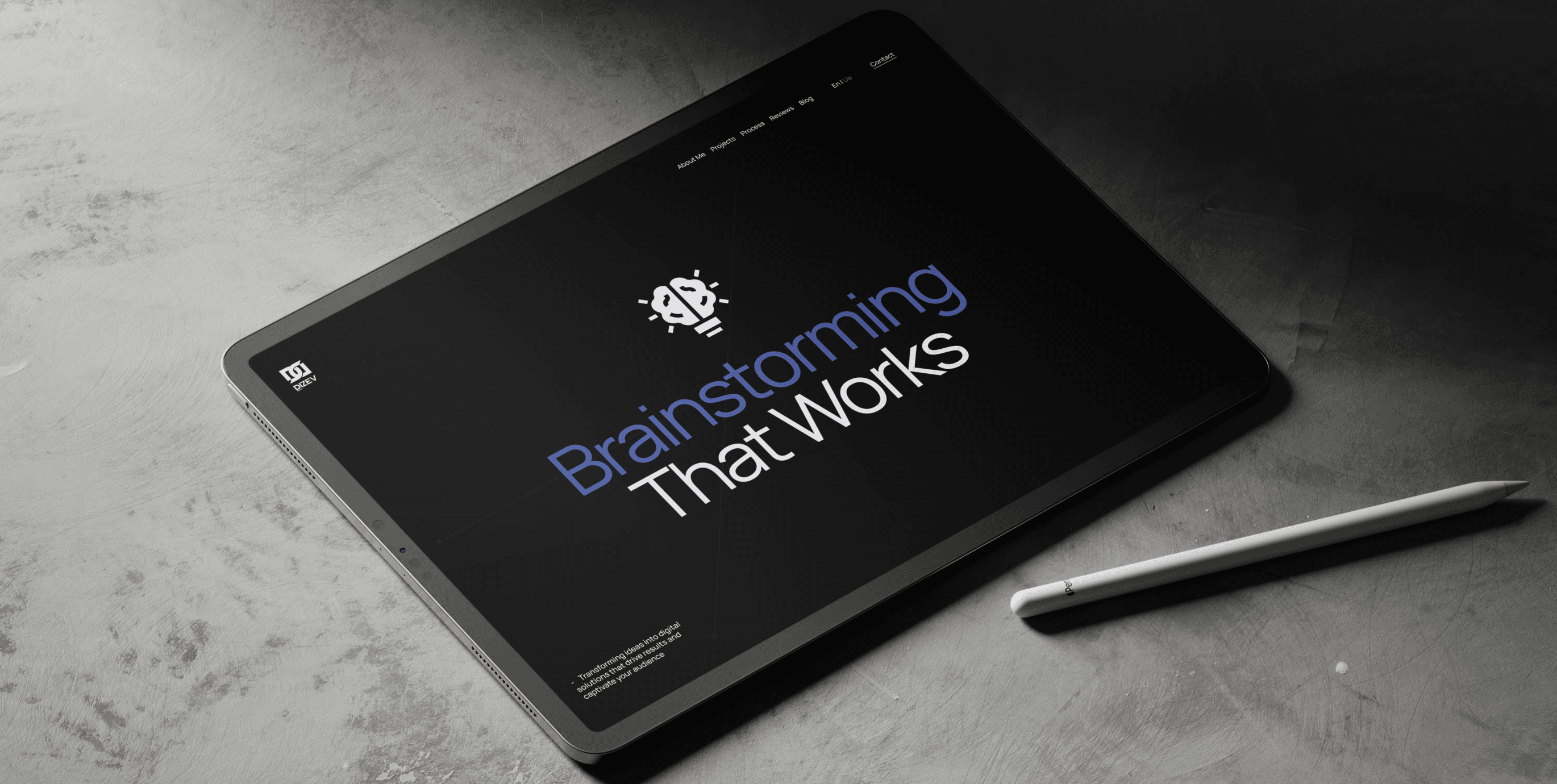
How to Run Effective Brainstorming Sessions to Improve Your Product
Brainstorming isn’t just spontaneous idea generation. When done right, it’s a powerful strategic tool that can significantly elevate a product, enhance user experience, and address real pain points within the target audience. However, as a designer and digital product specialist, I’ve often seen brainstorming sessions devolve into chaotic discussions with no actionable outcomes—or worse, formal meetings done just for the sake of “doing something.”
In this article, I’ll walk you through how I personally approach brainstorming when working on real products and services, and how to turn it into a valuable, results-driven process rather than just a collective imagination exercise.
Many people begin a brainstorm with the question: “What can we do that’s new?” But the more relevant question is: “What problems do users face, and how can we solve them?”
That’s why the very first step is research: understanding the user’s context, uncovering their frustrations, barriers, or unmet needs. This can be done through user surveys, one-on-one conversations, feedback analysis, or simply observing how people interact with your product in real life. Without this foundational layer, brainstorming becomes abstract and disconnected from reality. It’s the depth of this understanding that determines whether the ideas generated will be truly valuable—or just interesting.
Once the research is in place, the actual brainstorming begins. And here, the key is to create a safe space where all ideas are welcome—even the seemingly absurd ones. Why?
Because unconventional, offbeat, or “impossible” ideas often spark the most innovative solutions. What sounds unrealistic in the moment can inspire a breakthrough feature that users genuinely love. My approach is to document everything—text notes, visual sketches, voice memos. The goal at this stage isn’t to filter, but to generate.
Just as important: the ideas should always link back to the user problem. If an idea doesn’t aim to solve a specific pain point, it’s a guess—not a solution.
Next comes visualization. This doesn’t mean high-fidelity UI mockups—it can be hand-drawn sketches, basic wireframes, or quick frames in Figma. What matters is that you start to see how the idea could live within the product. Some ideas that sound great on paper completely fall apart when placed into a real interface. Visualization forces you to think structurally, spot weak connections, and refine the concept visually.
It’s also a powerful communication tool. A rough sketch can often express more than a paragraph of explanation. It helps align your team, your stakeholders, and your clients—offering a tangible sense of what the solution could look like in action.
But brainstorming doesn’t stop when you land on a “cool” idea. That’s only the beginning. What comes next is crucial: exposing your ideas to the outside world. Share them with your team, pitch them to stakeholders—or even better, test them with users. Even a brief user reaction can bring clarity, validate your assumptions, or help you pivot. You need to be ready to revisit ideas with fresh insights, adapt, iterate—or even abandon them altogether. That flexibility isn’t a weakness—it’s a sign of maturity in your product development process.
No brainstorming technique will succeed if your team lacks trust, psychological safety, and mutual respect. The environment you create shapes how openly people share their thoughts. If participants are afraid of sounding “dumb,” they’ll either stay quiet or play it safe—and you’ll never move past the obvious.
Encouraging focus without stifling creative freedom is an art. The early phase of brainstorming should be judgment-free, allowing space for raw, unfiltered creativity. Only after that comes analysis, prioritization, and critical thinking.
In the end, the effectiveness of a brainstorm isn’t defined by the tools or frameworks you use—it’s defined by the culture you build.
Brainstorming is just the beginning. But it often gives rise to solutions that change the product for the better.
How to Run Effective Brainstorming Sessions to Improve Your Product
Brainstorming isn’t just spontaneous idea generation. When done right, it’s a powerful strategic tool that can significantly elevate a product, enhance user experience, and address real pain points within the target audience. However, as a designer and digital product specialist, I’ve often seen brainstorming sessions devolve into chaotic discussions with no actionable outcomes—or worse, formal meetings done just for the sake of “doing something.”
In this article, I’ll walk you through how I personally approach brainstorming when working on real products and services, and how to turn it into a valuable, results-driven process rather than just a collective imagination exercise.
Many people begin a brainstorm with the question: “What can we do that’s new?” But the more relevant question is: “What problems do users face, and how can we solve them?”
That’s why the very first step is research: understanding the user’s context, uncovering their frustrations, barriers, or unmet needs. This can be done through user surveys, one-on-one conversations, feedback analysis, or simply observing how people interact with your product in real life. Without this foundational layer, brainstorming becomes abstract and disconnected from reality. It’s the depth of this understanding that determines whether the ideas generated will be truly valuable—or just interesting.
Once the research is in place, the actual brainstorming begins. And here, the key is to create a safe space where all ideas are welcome—even the seemingly absurd ones. Why?
Because unconventional, offbeat, or “impossible” ideas often spark the most innovative solutions. What sounds unrealistic in the moment can inspire a breakthrough feature that users genuinely love. My approach is to document everything—text notes, visual sketches, voice memos. The goal at this stage isn’t to filter, but to generate.
Just as important: the ideas should always link back to the user problem. If an idea doesn’t aim to solve a specific pain point, it’s a guess—not a solution.
Next comes visualization. This doesn’t mean high-fidelity UI mockups—it can be hand-drawn sketches, basic wireframes, or quick frames in Figma. What matters is that you start to see how the idea could live within the product. Some ideas that sound great on paper completely fall apart when placed into a real interface. Visualization forces you to think structurally, spot weak connections, and refine the concept visually.
It’s also a powerful communication tool. A rough sketch can often express more than a paragraph of explanation. It helps align your team, your stakeholders, and your clients—offering a tangible sense of what the solution could look like in action.
But brainstorming doesn’t stop when you land on a “cool” idea. That’s only the beginning. What comes next is crucial: exposing your ideas to the outside world. Share them with your team, pitch them to stakeholders—or even better, test them with users. Even a brief user reaction can bring clarity, validate your assumptions, or help you pivot. You need to be ready to revisit ideas with fresh insights, adapt, iterate—or even abandon them altogether. That flexibility isn’t a weakness—it’s a sign of maturity in your product development process.
No brainstorming technique will succeed if your team lacks trust, psychological safety, and mutual respect. The environment you create shapes how openly people share their thoughts. If participants are afraid of sounding “dumb,” they’ll either stay quiet or play it safe—and you’ll never move past the obvious.
Encouraging focus without stifling creative freedom is an art. The early phase of brainstorming should be judgment-free, allowing space for raw, unfiltered creativity. Only after that comes analysis, prioritization, and critical thinking.
In the end, the effectiveness of a brainstorm isn’t defined by the tools or frameworks you use—it’s defined by the culture you build.
Brainstorming is just the beginning. But it often gives rise to solutions that change the product for the better.
How to Run Effective Brainstorming Sessions to Improve Your Product
Brainstorming isn’t just spontaneous idea generation. When done right, it’s a powerful strategic tool that can significantly elevate a product, enhance user experience, and address real pain points within the target audience. However, as a designer and digital product specialist, I’ve often seen brainstorming sessions devolve into chaotic discussions with no actionable outcomes—or worse, formal meetings done just for the sake of “doing something.”
In this article, I’ll walk you through how I personally approach brainstorming when working on real products and services, and how to turn it into a valuable, results-driven process rather than just a collective imagination exercise.
Many people begin a brainstorm with the question: “What can we do that’s new?” But the more relevant question is: “What problems do users face, and how can we solve them?”
That’s why the very first step is research: understanding the user’s context, uncovering their frustrations, barriers, or unmet needs. This can be done through user surveys, one-on-one conversations, feedback analysis, or simply observing how people interact with your product in real life. Without this foundational layer, brainstorming becomes abstract and disconnected from reality. It’s the depth of this understanding that determines whether the ideas generated will be truly valuable—or just interesting.
Once the research is in place, the actual brainstorming begins. And here, the key is to create a safe space where all ideas are welcome—even the seemingly absurd ones. Why?
Because unconventional, offbeat, or “impossible” ideas often spark the most innovative solutions. What sounds unrealistic in the moment can inspire a breakthrough feature that users genuinely love. My approach is to document everything—text notes, visual sketches, voice memos. The goal at this stage isn’t to filter, but to generate.
Just as important: the ideas should always link back to the user problem. If an idea doesn’t aim to solve a specific pain point, it’s a guess—not a solution.
Next comes visualization. This doesn’t mean high-fidelity UI mockups—it can be hand-drawn sketches, basic wireframes, or quick frames in Figma. What matters is that you start to see how the idea could live within the product. Some ideas that sound great on paper completely fall apart when placed into a real interface. Visualization forces you to think structurally, spot weak connections, and refine the concept visually.
It’s also a powerful communication tool. A rough sketch can often express more than a paragraph of explanation. It helps align your team, your stakeholders, and your clients—offering a tangible sense of what the solution could look like in action.
But brainstorming doesn’t stop when you land on a “cool” idea. That’s only the beginning. What comes next is crucial: exposing your ideas to the outside world. Share them with your team, pitch them to stakeholders—or even better, test them with users. Even a brief user reaction can bring clarity, validate your assumptions, or help you pivot. You need to be ready to revisit ideas with fresh insights, adapt, iterate—or even abandon them altogether. That flexibility isn’t a weakness—it’s a sign of maturity in your product development process.
No brainstorming technique will succeed if your team lacks trust, psychological safety, and mutual respect. The environment you create shapes how openly people share their thoughts. If participants are afraid of sounding “dumb,” they’ll either stay quiet or play it safe—and you’ll never move past the obvious.
Encouraging focus without stifling creative freedom is an art. The early phase of brainstorming should be judgment-free, allowing space for raw, unfiltered creativity. Only after that comes analysis, prioritization, and critical thinking.
In the end, the effectiveness of a brainstorm isn’t defined by the tools or frameworks you use—it’s defined by the culture you build.
Brainstorming is just the beginning. But it often gives rise to solutions that change the product for the better.
How to Run Effective Brainstorming Sessions to Improve Your Product
Brainstorming isn’t just spontaneous idea generation. When done right, it’s a powerful strategic tool that can significantly elevate a product, enhance user experience, and address real pain points within the target audience. However, as a designer and digital product specialist, I’ve often seen brainstorming sessions devolve into chaotic discussions with no actionable outcomes—or worse, formal meetings done just for the sake of “doing something.”
In this article, I’ll walk you through how I personally approach brainstorming when working on real products and services, and how to turn it into a valuable, results-driven process rather than just a collective imagination exercise.
Many people begin a brainstorm with the question: “What can we do that’s new?” But the more relevant question is: “What problems do users face, and how can we solve them?”
That’s why the very first step is research: understanding the user’s context, uncovering their frustrations, barriers, or unmet needs. This can be done through user surveys, one-on-one conversations, feedback analysis, or simply observing how people interact with your product in real life. Without this foundational layer, brainstorming becomes abstract and disconnected from reality. It’s the depth of this understanding that determines whether the ideas generated will be truly valuable—or just interesting.
Once the research is in place, the actual brainstorming begins. And here, the key is to create a safe space where all ideas are welcome—even the seemingly absurd ones. Why?
Because unconventional, offbeat, or “impossible” ideas often spark the most innovative solutions. What sounds unrealistic in the moment can inspire a breakthrough feature that users genuinely love. My approach is to document everything—text notes, visual sketches, voice memos. The goal at this stage isn’t to filter, but to generate.
Just as important: the ideas should always link back to the user problem. If an idea doesn’t aim to solve a specific pain point, it’s a guess—not a solution.
Next comes visualization. This doesn’t mean high-fidelity UI mockups—it can be hand-drawn sketches, basic wireframes, or quick frames in Figma. What matters is that you start to see how the idea could live within the product. Some ideas that sound great on paper completely fall apart when placed into a real interface. Visualization forces you to think structurally, spot weak connections, and refine the concept visually.
It’s also a powerful communication tool. A rough sketch can often express more than a paragraph of explanation. It helps align your team, your stakeholders, and your clients—offering a tangible sense of what the solution could look like in action.
But brainstorming doesn’t stop when you land on a “cool” idea. That’s only the beginning. What comes next is crucial: exposing your ideas to the outside world. Share them with your team, pitch them to stakeholders—or even better, test them with users. Even a brief user reaction can bring clarity, validate your assumptions, or help you pivot. You need to be ready to revisit ideas with fresh insights, adapt, iterate—or even abandon them altogether. That flexibility isn’t a weakness—it’s a sign of maturity in your product development process.
No brainstorming technique will succeed if your team lacks trust, psychological safety, and mutual respect. The environment you create shapes how openly people share their thoughts. If participants are afraid of sounding “dumb,” they’ll either stay quiet or play it safe—and you’ll never move past the obvious.
Encouraging focus without stifling creative freedom is an art. The early phase of brainstorming should be judgment-free, allowing space for raw, unfiltered creativity. Only after that comes analysis, prioritization, and critical thinking.
In the end, the effectiveness of a brainstorm isn’t defined by the tools or frameworks you use—it’s defined by the culture you build.
Brainstorming is just the beginning. But it often gives rise to solutions that change the product for the better.
How to Run Effective Brainstorming Sessions to Improve Your Product
Brainstorming isn’t just spontaneous idea generation. When done right, it’s a powerful strategic tool that can significantly elevate a product, enhance user experience, and address real pain points within the target audience. However, as a designer and digital product specialist, I’ve often seen brainstorming sessions devolve into chaotic discussions with no actionable outcomes—or worse, formal meetings done just for the sake of “doing something.”
In this article, I’ll walk you through how I personally approach brainstorming when working on real products and services, and how to turn it into a valuable, results-driven process rather than just a collective imagination exercise.
Many people begin a brainstorm with the question: “What can we do that’s new?” But the more relevant question is: “What problems do users face, and how can we solve them?”
That’s why the very first step is research: understanding the user’s context, uncovering their frustrations, barriers, or unmet needs. This can be done through user surveys, one-on-one conversations, feedback analysis, or simply observing how people interact with your product in real life. Without this foundational layer, brainstorming becomes abstract and disconnected from reality. It’s the depth of this understanding that determines whether the ideas generated will be truly valuable—or just interesting.
Once the research is in place, the actual brainstorming begins. And here, the key is to create a safe space where all ideas are welcome—even the seemingly absurd ones. Why?
Because unconventional, offbeat, or “impossible” ideas often spark the most innovative solutions. What sounds unrealistic in the moment can inspire a breakthrough feature that users genuinely love. My approach is to document everything—text notes, visual sketches, voice memos. The goal at this stage isn’t to filter, but to generate.
Just as important: the ideas should always link back to the user problem. If an idea doesn’t aim to solve a specific pain point, it’s a guess—not a solution.
Next comes visualization. This doesn’t mean high-fidelity UI mockups—it can be hand-drawn sketches, basic wireframes, or quick frames in Figma. What matters is that you start to see how the idea could live within the product. Some ideas that sound great on paper completely fall apart when placed into a real interface. Visualization forces you to think structurally, spot weak connections, and refine the concept visually.
It’s also a powerful communication tool. A rough sketch can often express more than a paragraph of explanation. It helps align your team, your stakeholders, and your clients—offering a tangible sense of what the solution could look like in action.
But brainstorming doesn’t stop when you land on a “cool” idea. That’s only the beginning. What comes next is crucial: exposing your ideas to the outside world. Share them with your team, pitch them to stakeholders—or even better, test them with users. Even a brief user reaction can bring clarity, validate your assumptions, or help you pivot. You need to be ready to revisit ideas with fresh insights, adapt, iterate—or even abandon them altogether. That flexibility isn’t a weakness—it’s a sign of maturity in your product development process.
No brainstorming technique will succeed if your team lacks trust, psychological safety, and mutual respect. The environment you create shapes how openly people share their thoughts. If participants are afraid of sounding “dumb,” they’ll either stay quiet or play it safe—and you’ll never move past the obvious.
Encouraging focus without stifling creative freedom is an art. The early phase of brainstorming should be judgment-free, allowing space for raw, unfiltered creativity. Only after that comes analysis, prioritization, and critical thinking.
In the end, the effectiveness of a brainstorm isn’t defined by the tools or frameworks you use—it’s defined by the culture you build.
Brainstorming is just the beginning. But it often gives rise to solutions that change the product for the better.
//
//
//
//
//
Blog
Blog
Blog
Blog
Blog
Read also other
latest articles
Read also other
latest articles
Websites Boost Business
Websites Boost Business
Websites Boost Business
Websites Boost Business
( 2023 )
( 2024 )

Beauty or utility in design
Beauty or utility in design
Beauty or utility in design
Beauty or utility in design
( 2023 )
( 2024 )
Beauty or utility in design
( 2023 )
Please tell me about your project
Please tell me about your project
Please tell me about your project
Please tell me about your project
Free consultation with an expert. Choose a convenient time or send message in Telegram or WhatsApp and I will contact you!
Free consultation with an expert. Choose a convenient time or send message in Telegram or WhatsApp and I will contact you!
Free consultation with an expert. Choose a convenient time or send message in Telegram or WhatsApp and I will contact you!
Free consultation with an expert. Choose a convenient time or send message in Telegram or WhatsApp and I will contact you!
Please tell me about your project
Free consultation with an expert. Choose a convenient time or send message in Telegram or WhatsApp and I will contact you!
//
get in touch
©2025 Copyright

//
get in touch
©2025 Copyright
//
get in touch
©2025 Copyright
//
get in touch
©2025 Copyright